The History of Baccarat

Baccarat is one of the oldest and most respected casino games. It is known for luxury, high-stakes play, and simple rules. Today, baccarat is popular in both casinos and online platforms. The game has a long history that goes back centuries. Its origins are not clear, but some say it comes from ancient rituals or medieval Europe. Baccarat became popular in aristocratic France and later spread to Asia and the Americas. Over the years, the game has changed, but it has kept its core principles. This page looks at the history of baccarat, from its beginnings to its popularity today.
📜 Origin of Baccarat
The exact origin of baccarat is not fully clear, but most historians agree that it started in Italy in the 15th century. An early version of the game was called baccarà, which means “zero” in Italian. This name refers to an important rule in the game: 10s and face cards are worth 0 points, a rule that is still used in modern baccarat.
Baccarat is often linked to Felix Falguiere, who is believed to have played an early version of the game using tarot cards before the standard deck was introduced. In its early days, baccarat was mainly played by Italian nobles in private settings. The goal of the game was to reach a hand value closest to 9, which is still the main objective today.
From Italy, baccarat spread to France, where it became popular among the royal family and upper class. During the reign of King Charles VIII, two French versions appeared: Chemin de Fer and Baccarat Banque. These versions introduced the idea of players taking turns as the banker.
In the 18th and 19th centuries, baccarat was sometimes banned in France, but people continued to play it in private. This helped build its reputation as a high-stakes game played by wealthy players. Over time, baccarat spread across Europe, became popular in England, and later reached North America.
These early years shaped baccarat into the game we know today. Even though different versions appeared and some rules changed, the basic structure of the game stayed the same and allowed baccarat to grow worldwide in the 20th century.
🏙️ Modern-Day Baccarat
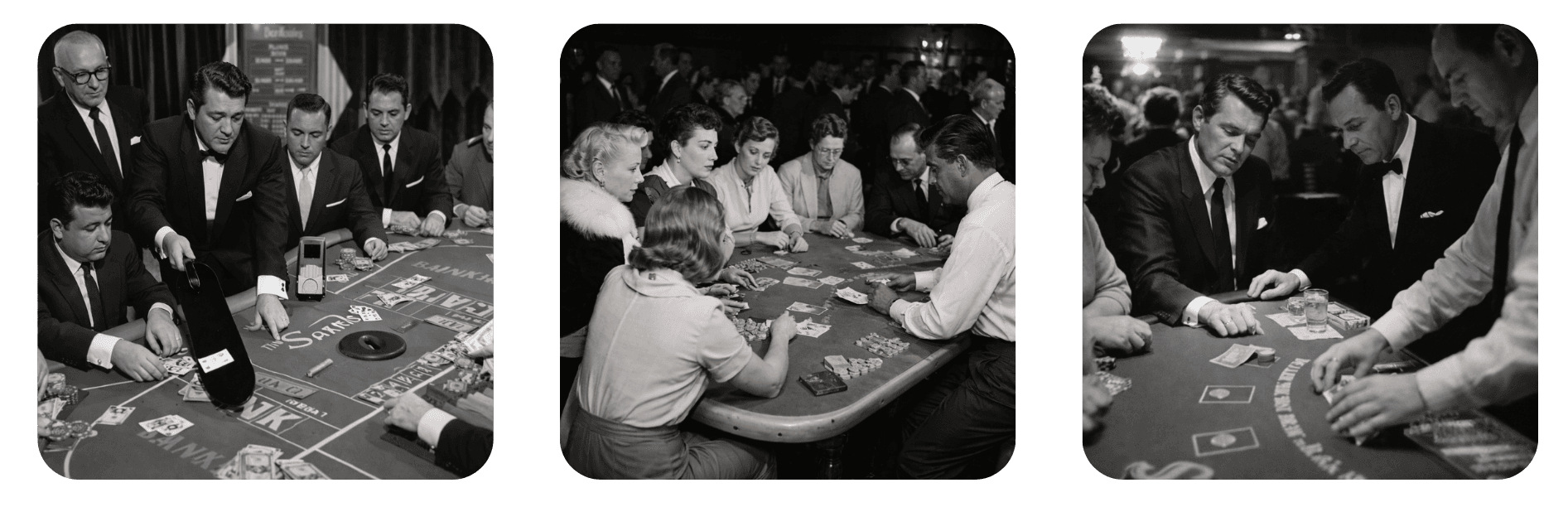
Baccarat began to change from a game for the elite into a casino game for the public in the 20th century. This happened mainly with the growth of land-based casinos in North and South America. In Cuba, a simpler version called Punto Banco was created. This version removed player decisions and used fixed rules for drawing cards, which made the game faster and easier for casinos to run.
Baccarat reached Las Vegas in 1959, when it was introduced at the Sands Casino. The version used was Punto Banco, but the game kept its high-status image. Casinos often placed baccarat tables in private or VIP areas to make the game feel exclusive and to attract high-stakes players. Minimum bets were usually higher than for other games, which added to this image.
Later in the 20th century, baccarat became extremely popular in Macau and other parts of Asia. Many players connected with the game because of cultural beliefs about luck and numbers. Today, baccarat makes up more than 90% of casino revenue in Macau, making it the most important casino game there.
In the 2000s, online casinos made baccarat available to even more players. Live dealer games, mobile play, and new formats like Mini Baccarat, Speed Baccarat, and No Commission Baccarat helped make the game easier to access. Players can now play baccarat with smaller budgets and from almost anywhere.
Even with these changes, modern baccarat has kept what makes it popular. The game is fast, easy to understand, and has a low house edge. Whether played in a physical casino or on a mobile phone, baccarat continues to work well in both traditional and modern settings.